Relocating to Lincolnshire IL From Chicago: What to Expect
July 16, 2026
July 16, 2026
Thinking about leaving Chicago for more space, easier parking, and a different daily rhythm? If Lincolnshire is on your shortlist, you are likely weighing a big lifestyle shift, not just a change of address. This guide will help you understand what living in Lincolnshire can actually feel like, from commuting and housing to amenities and everyday routines, so you can decide whether it fits your next chapter. Let’s dive in.
Lincolnshire is a small village in southeast Lake County with about 7,940 residents spread across roughly 4.5 square miles. It sits about 32 to 34 miles from downtown Chicago, which makes it a true suburb rather than a city-edge neighborhood. If you are moving from the city, that difference shapes almost everything about daily life.
The village stands out for its established residential setting, strong regional access, and polished feel. Census data shows a median household income of $185,580, a 77.0% rate of adults with a bachelor’s degree or higher, and a 78.2% owner-occupied housing rate. Those numbers point to a well-established community where many households put down long-term roots.
If you are used to Chicago blocks filled with stores, apartments, and restaurants side by side, Lincolnshire will feel more separated and more spacious. The village notes that residential areas are distinct from commercial and office uses, with neighborhoods set among parks and forest preserve land. In practical terms, you are usually driving to errands and dining rather than walking out your front door to a continuous retail strip.
That said, Lincolnshire is not isolated. Daily conveniences are centered in key retail areas such as Village Green, CityPark, and Lincolnshire Commons. The village also highlights 25 restaurants, a 20-screen cinema and IMAX complex, the Lincolnshire Marriott Resort, and the Marriott Theatre, so you still have a solid mix of nearby options.
For most residents, driving is the default. Lincolnshire has direct access to I-94, a full interchange at Route 22, and connections to US 45, IL 21, and IL 22. O’Hare is also within about 17 to 19 miles, which can be especially helpful if your work or family life involves regular travel.
The numbers back up that drive-first pattern. CMAP reports that 50.3% of workers drive alone, while 3.2% use transit and 37.3% work from home. If you are moving from a train-oriented or transit-heavy Chicago routine, this is one of the biggest adjustments to expect.
Lincolnshire does not have its own Metra station, but nearby stations can support a hybrid commute. The Prairie View station at 2701 Main Street is part of Metra’s North Central Service and includes 340 parking spaces. Buffalo Grove and Vernon Hills are also on that same line.
Pace can help fill in the gaps. Route 626 runs on weekdays from Dempster-Skokie Station on the CTA Yellow Line to Lincolnshire Business Center, and Route 272 provides weekday and Saturday service between Golf Mill and Hawthorn Mall via Milwaukee Avenue with service in Lincolnshire. For many Chicago transferees, transit becomes a backup or occasional tool rather than the center of the routine.
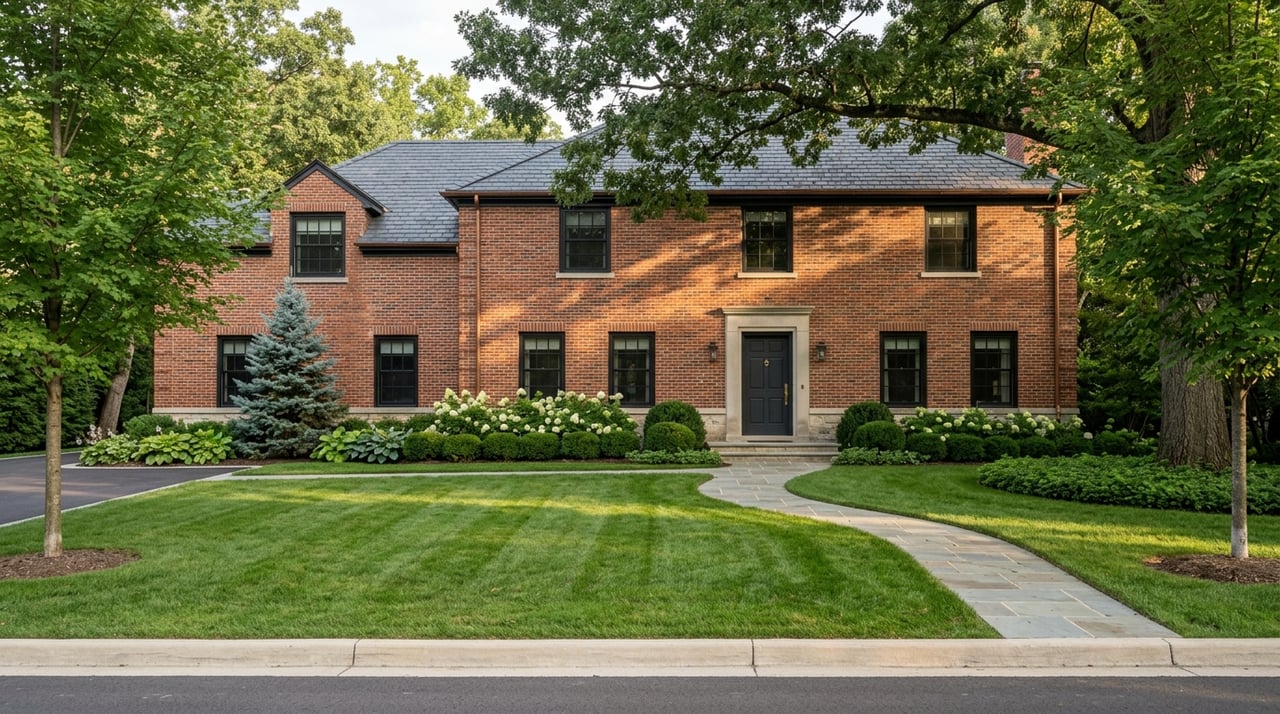
One reason buyers look at Lincolnshire is the range of home types. The village includes single-family homes, townhouses, and condominiums, so you are not locked into one kind of lifestyle. Whether you want more privacy, lower maintenance, or something in between, the housing mix gives you options.
CMAP reports that 53.0% of housing is single-family detached, 14.1% is single-family attached, and 32.1% is in buildings with five or more units. For someone coming from Chicago, that often means more opportunities for detached homes and lower-density living, while still leaving room for townhome and condo choices.
Lincolnshire’s homes are relatively new compared with many older communities in the region. CMAP lists the median year built as 1992, and 40.5% of housing units were built in 2000 or later. If you are coming from an older Chicago condo or vintage home, you may find more modern layouts and newer construction patterns here.
Pricing reflects the village’s North Shore location and housing profile. Census data shows a median owner-occupied home value of $677,700 and a median gross rent of $2,858. That does not mean every property will match those figures, but it does signal that Lincolnshire is a higher-priced market.
One of the biggest changes from city living may be how easy it is to access green space. Lincolnshire maintains 11 parks, 185 acres of natural areas, and more than 5 miles of paths. Those paths connect neighborhoods with parks, schools, shopping areas, commercial zones, the Vernon Area Library, and the Prairie View Metra station.
The village describes Spring Lake Park as the heart of Lincolnshire, which says a lot about the community’s identity. If you want a suburb where outdoor recreation is part of ordinary life rather than a special outing, Lincolnshire makes a strong case.
Lincolnshire has a more event-based community rhythm than a dense urban street life. Current village events include Food Truck Thursdays and Lakeside Concerts, Red, White, & Boom, Boo Bash, Lincolnshire Lights, and Summer in the Shire. These kinds of gatherings can help you feel connected as you settle in.
For many city movers, this is an appealing tradeoff. You may give up some of the spontaneity of walk-everywhere living, but you gain a village calendar and a more contained local pace that many people find easier to navigate.
For many buyers, schools are a key part of the move. Lincolnshire is served by District 103, which says it serves about 1,850 students and includes Laura B. Sprague, Half Day, and Daniel Wright. The district notes Blue Ribbon recognition for each of its three schools.
Stevenson High School, also in Lincolnshire, currently highlights five Blue Ribbon Awards, 4,310 students, an 18:1 student-teacher ratio, and 31 AP courses. If schools are part of your decision-making process, Lincolnshire offers well-defined public school options that many relocating households will want to review closely.
The move from Chicago to Lincolnshire is less about better or worse and more about fit. City life often offers density, transit access, and walkable variety. Lincolnshire offers more separation between residential and commercial areas, a stronger connection to open space, and a more drive-oriented routine.
Here is the practical comparison many buyers end up making:
| Topic | Chicago or the City | Lincolnshire |
|---|---|---|
| Daily routine | Often walkable and transit-connected | Mostly drive-first with transit support |
| Housing pattern | Higher density in many areas | More detached and low-density options |
| Green space access | Varies by neighborhood | Strong village-wide parks and paths network |
| Retail layout | Continuous corridors in many areas | Convenience clustered in key nodes |
| Commute style | More multimodal | Car-centered for many households |
Lincolnshire can be a strong fit if you want a suburban setting with good highway access, a mix of housing choices, and a strong emphasis on parks and community amenities. It may also appeal if you want proximity to Chicago without feeling like you still live in an urban environment.
It may be less ideal if your top priority is a rail-centered routine or a neighborhood where most errands happen on foot. That does not mean Lincolnshire lacks connectivity. It simply means the village works best when you want space, structure, and a quieter pace built around regional access.
If you are seriously considering Lincolnshire, it helps to approach the move with a suburb-specific checklist.
A relocation move is easier when you match the community to your real routine, not just a map search or weekend impression.
If you are planning a move to Lincolnshire, working with an experienced North Shore team can make the process much clearer. The GGL Group brings deep local knowledge, relocation experience, and thoughtful guidance for buyers and sellers across nearby communities. When you are ready to talk through neighborhoods, housing options, timing, or your next move, connect with The GGL Group.