Preparing A Historic Lake Forest Home For Sale
May 28, 2026
May 28, 2026
If you are getting ready to sell a historic home in Lake Forest, you are not just preparing another listing. You are balancing architecture, condition, city review requirements, and the story that makes your property stand out in one of the North Shore’s most established markets. With Lake Forest showing a median listing price near $1.60 million, about 103 homes for sale, a median 28 days on market, and a 98% sale-to-list ratio in the March 2026 snapshot, thoughtful preparation can help you present both character and confidence to buyers. Here is how to prepare your historic Lake Forest home for sale without losing what makes it special. Let’s dive in.
Before you plan repairs, painting, landscaping, or additions, confirm how your property is classified. In Lake Forest, homes may fall under different review paths depending on whether they are landmarks, located in a historic district, or outside those districts.
If your home is a landmark or sits in a historic district, a certificate of appropriateness may be required before exterior changes, visible additions, certain demolition work, interior landmark work, or building scale variances. The city will not issue the related permit until that certificate is approved, so this step should come early.
Outside historic districts, the Building Review Board may still review demolition, new buildings, additions, exterior alterations, lighting, signs, landscaping, and site plans. Lake Forest encourages owners to contact planning staff early in the design phase, which can help you avoid delays before listing.
Many sellers lose time by assuming a project is minor when the city sees it differently. In Lake Forest, demolition can include major front façade changes or even a second-floor addition, so it is wise to verify the scope before work begins.
That matters even more if you are trying to align contractor schedules, photography, and launch timing. A clear approval path helps you avoid spending money on changes that may need to be revised later.
Historic homes tend to show their value in details that newer homes simply do not have. Before making updates, take stock of the features that define your home’s appearance and feel.
Lake Forest’s own documentation forms point owners toward major facades, character-defining details, exterior features, and landscape treatments. National Park Service guidance also highlights elements such as original windows, porches, masonry, trim, fireplaces, staircases, historic floors, hardware, and the overall floor plan.
For a historic sale, documentation is part of presentation. Gather older photos, permit history, restoration invoices, architect information if known, and current images of the main facades and notable details.
This record can help support your marketing, answer buyer questions, and make the home’s history easier to communicate. It also creates a more organized handoff if buyers want to understand prior restoration work.
When preparing a historic home for market, focus first on issues tied to water intrusion, wear, and visible decay. In most cases, buyers will respond more positively to a home that feels well maintained than one with flashy updates that ignore core preservation needs.
Start with the roof, gutters, masonry, windows, and porches. These areas have an outsized effect on both first impressions and long-term maintenance concerns.
Original windows are often a major part of a historic home’s appeal. National Park Service guidance recommends repair before replacement when possible, and suggests options like weatherstripping, caulking, and storm windows before deciding to remove historic units.
For sellers, that can mean preserving original craftsmanship while improving comfort and appearance. If deterioration is too extensive, evaluate the next step carefully and with the home’s historic context in mind.
Brick, stone, and mortar deserve a light touch. Preservation guidance recommends cleaning masonry only when necessary, using the gentlest effective method, and avoiding sandblasting and high-pressure water.
If repointing is needed, the new mortar should match the historic mortar in strength, composition, color, texture, and joint profile. Done well, this protects the building and supports a more credible presentation to buyers.
In many Lake Forest homes, the porch is one of the most recognizable architectural features. It often shapes the home’s curb appeal and can strongly influence a buyer’s first impression.
Because porches are vulnerable to moisture and rot, inspect flooring, steps, railings, columns, ceilings, and trim. If parts must be replaced, matching original details as closely as possible helps preserve the home’s visual integrity.
In Lake Forest, the grounds often matter almost as much as the house. Mature trees, hedges, drives, walks, walls, terraces, and other site elements may be part of the property’s historic identity.
That aligns with local standards as well. Lake Forest’s Building Review Board emphasizes preserving and integrating existing natural features, and its design standards favor visual compatibility and natural landscaping.
Before listing, prioritize site work that improves order and visibility without changing the historic setting. That can include pruning, repairing walkways, refreshing gravel or drive edges, stabilizing walls or fences, and cleaning up overgrown planting beds.
Avoid introducing materials or designs that feel out of place with the house. Buyers tend to notice when the site and the architecture feel consistent.
Some sellers consider adding square footage or reworking major spaces before going to market. In a historic Lake Forest home, that decision deserves extra caution.
Both Lake Forest standards and preservation guidance favor additions that are compatible and subordinate to the original house. When possible, they are often best placed at the rear or on an inconspicuous side so they do not overpower character-defining features.
A large addition or major exterior alteration can add time, cost, and approval complexity. It may also narrow your buyer pool if the result feels less authentic or disrupts the home’s original form.
In many cases, sellers get a better return by repairing, documenting, and presenting the home well instead of trying to fully reinvent it before listing. A strong marketing strategy can often do more for value than a rushed construction project.
Historic homes sell best when buyers can appreciate both their livability and their original design. That usually means avoiding over-modernization, especially in rooms that still retain important architectural features.
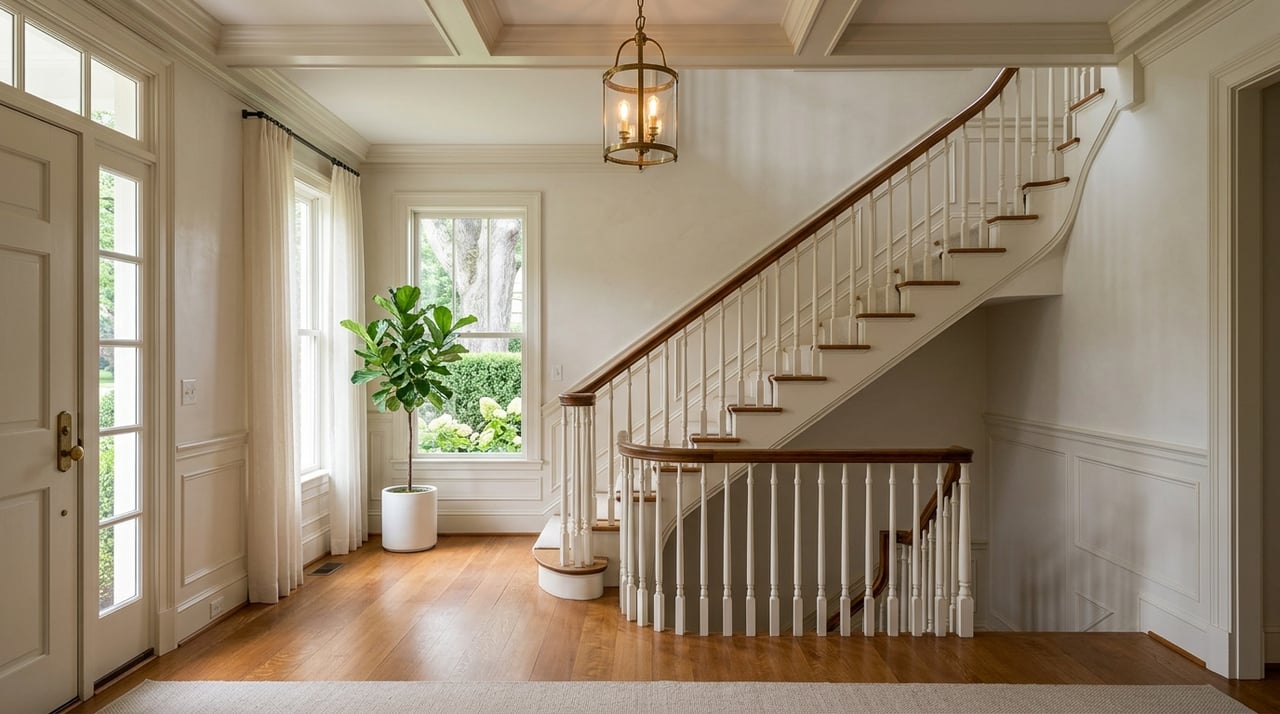
Preservation guidance often points to entry halls, parlors, dining rooms, primary staircases, fireplaces and mantels, trim, doors, windows, floors, and hardware as defining interior elements. Those spaces deserve a careful hand.
Try not to remove walls, erase trim, paint over notable millwork without a plan, or strip away original hardware just to chase current design trends. Buyers shopping in Lake Forest’s legacy market often value authenticity when it is paired with good maintenance and thoughtful presentation.
Instead, consider light cosmetic work that improves clarity and condition. Fresh neutral paint where appropriate, polished floors, repaired plaster, and updated lighting can help the home feel brighter without changing its identity.
Historic staging works best when it makes the home easier to read. According to the National Association of Realtors 2025 staging report, 83% of buyers’ agents said staging made it easier for buyers to visualize the property as a future home, and buyers’ agents also rated photos, physical staging, video, and virtual tours as important to clients.
The most important rooms to stage were the living room, primary bedroom, and kitchen. For a historic home, those spaces should feel welcoming but not crowded.
Use simpler furnishings, open sightlines, and a restrained palette so buyers can notice millwork, plaster, fireplaces, stair details, stonework, and original windows. Good lighting is especially important in older homes where detail can disappear in shadow.
The goal is not to strip the home of personality. It is to help buyers understand the scale, flow, and craftsmanship without distraction.
A legacy property needs more than standard listing copy. Buyers are often drawn to the year built, architect if known, original materials, restoration history, and the broader context of the home’s setting.
That is where strong documentation and visual marketing come together. Professional photography, drone imagery, twilight photography, video, and virtual tours can help show scale, craftsmanship, and the relationship between the house and its grounds.
Your marketing should explain what has been preserved, what has been improved, and what makes the property distinct in Lake Forest. That can include facade details, landscape features, materials, notable interior elements, and any landmark or district context if applicable.
In a premium market, story and presentation often shape emotional connection. When buyers understand both the beauty and the stewardship behind a home, they can see its value more clearly.
Selling a historic home in Lake Forest is rarely a simple checklist. It is a process that blends preservation awareness, timing, city review, contractor coordination, pricing judgment, and marketing that knows how to reach the right buyer.
That is where local experience matters. In a market with deep architectural history and strong buyer expectations, the best preparation plan is usually specific to your home, your timeline, and the level of work that will genuinely support your sale.
If you are thinking about selling a historic home in Lake Forest, The GGL Group can help you evaluate what to repair, what to preserve, and how to present the property with the care and market insight it deserves.